|
Welcome to the home page of the 20th Computer Automated Multi-Paradigm Modelling (CAMPaM) workshop. The workshop aims to further the state-of-the-art in Computer Automated Multi-Paradigm Modelling (CAMPaM) - a name (though Hans preferred "Aided" to "Automated") coined by Pieter Mosterman and Hans Vangheluwe in the late '90s - as well as to define future directions of this exciting research area by bringing together world experts in the field for an intense one-week workshop. Multi-Paradigm Modelling (MPM) advocates modelling every part and aspect/view of a system explicitly, at the most appropriate level(s) of abstraction, using the most appropriate modelling formalism(s). This, realizing that explicitly modelling workflow/processes is as important as is the modelling of artefacts. In addition to modelling workflows, modelling languages' engineering, including model transformation, and the study of their semantics, are used to realize MPM. MPM is seen as an effective answer to the challenges of designing and evolving Cyber-Physical Systems (CPS) and Systems of Systems (SoS). We hereby notice a convergence and unification of Science and Engineering techniques and workflows. The workshop takes the Dagstuhl seminar format -- bring a critical mass of top researchers together in a relatively remote location and soon new ideas will flow. We aim to tackle open scientific problems and explore future directions of MPM by bringing together a small group with a mixture of senior world experts and junior researchers in this field for an intense one-week, by invitation only workshop in a relatively secluded location.
This is the CAMPaM 2.0 reboot of the succesful series of CAMPaM workshops (mostly) held at McGill's Bellairs Research Institute on the beautiful island of Barbados. |
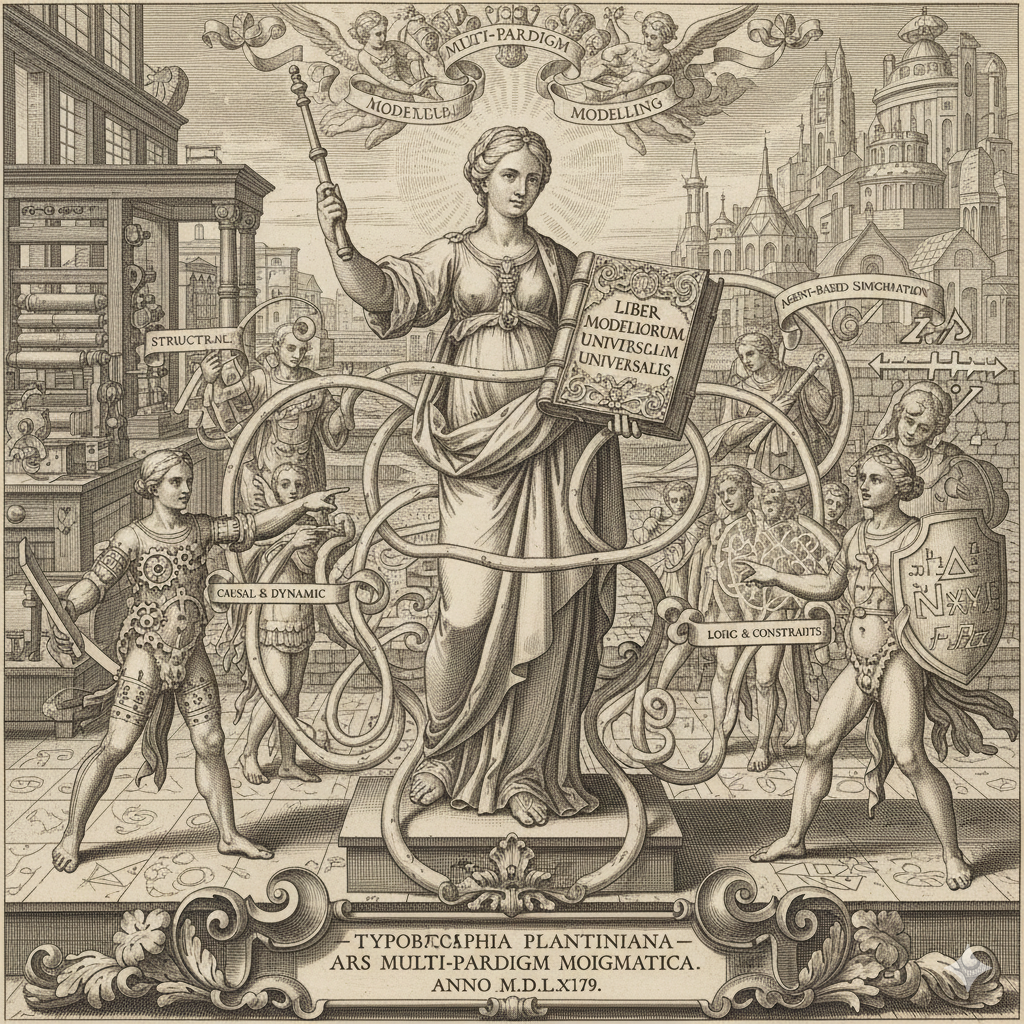 |
Organizers
The Topics
Some tentative topics (the actual topics will be determined is focusing discussions during the morning of the first workshop day):
- Experiment modelling and experiment/data replicability. There are currently Electronic Lab Notebooks, but they do not capture the complexity of experiments (both real-world and software/simulation/data driven, and combinations thereof). Explicitly modelling, recording and mining experiments is crucial for replicability. This is a basis for making model validity explicit. One important aspect of experiment replicability is traceability. This is often in the form of keeping track of how an artefact was obtained. This relates a trace of (experimentation) activities and artefacts to the process/workflow that gave rise to that trace. It is only this backward link that will explain whether two artefacts are for example related via version relationship, and if so, whether a new version was needed to fix a bug, due to a new or changing requirement, to optimize the system, etc. Another important aspect of meaningful experiment replicability (and collaboration, both between experimentation stages and between different stakeholders) is explainability of concepts used. There is a link with model management and with testing. A test is a particular kind of experiment, be it on software or on a physical system, or combinations thereof. There is also the interesting topic (related to the MPM topic) of front-loading of testing by early-stage experiments, usually on simplified or incomplete models.
- MPM = multi-* (with * = view, component, formalism, abstraction, ...). We need to delve deeper into the topics discussed at the Using Multi-* Modelling to Manage Complexity in Systems Engineering 2025 Shonan workshop, and here too, there is a link with model management. Topics of particular interest are consistency and traceability (see experiment modelling) between the many related artefacts.
- Focusing on the FTG(+PM), the Formalism Transformation Graph + Process Model, continuing the work started in the MPM4CPS COST action.
Some workflow patterns and types of modelling languages (formalisms, such as differential equations and Statecharts), are used successfully in CPS engineering practice.
In analogy with software Design Patterns, we believe there exist useful modelling paradigm (formalisms + workflow) patterns that should be made explicit.
We should bring together researchers and practitioners whose expertise covers design, optimization, deployment, formal methods, simulation, digital twins etc.,
all combining different formalisms.
The concrete goals are to:
- work on the foundation of FTG(+PM): what are the most appropriate languages and architectures to support this (a Modelverse?)?
- Catalogue useful properties of modelling formalisms and workflows.
- Classify different formalisms and workflows based on these properties and link them with different types of CPS problems. This, starting from a CPS case summary by each participant, charting used formalisms and relationships between these, as well as workflows.
- The current complex systems we design, build and maintain no longer operate in isolation. That is why after some 15 years, there is a revival of the concept of System of Systems (SoS). The goal is to explore frameworks for SoSs based on MPM principles and Twinning architectures.
- Human factors in modelling, in particular the Modelling Experience, bringing together UX and Model Management researchers.
A bit more about Computer Automated Multi-Paradigm Modelling (CAMPaM)
CAMPaM acknowledges that explicit modelling of all parts and aspects/views of a system under study is the central activity in and main enabler for the model-based analysis, design, realization/deployment, testing, maintenance, ... of complex systems. Because of the heterogeneous nature of for example embedded systems and the many implementation technologies, Multi-Paradigm Modelling is a critical enabler for holistic design approaches (such as mechatronics), to avoid overdesign and to support system integration.
Multi-paradigm techniques have been successfully applied in the field of software architectures, control system design, model integrated computing, and tool interoperability.
Sixteen CAMPaM workshops at Bellairs '04, '05, '06, '07, '08, '09, '10, '11, '12, '13, '14, '15, '16, '17, '18, '19, '22, '23 (at Cargèse, Corsica), many Multi-Paradigm Modelling (MPM) and from 2019 Multi-Paradigm Modelling for Cyber-Physical Systems (MPM4CPS) conference sessions and MoDELS '06 (Genoa), '07 (Nashville), '09 (Denver), '10 (Oslo), '11 (Wellington), '12 (Innsbruck), '13 (Miami), '14 (Valencia), '15 (Ottawa), '19 (Munich), '20 (online), '21 (online) workshops have been held. The Using Multi-* Modelling to Manage Complexity in Systems Engineering. NII Shonan Meeting No. 219. at Shonan Village Center, Japan in March 2025 delved deeper into the foundations of MPM. A special issue of the ACM Transactions on Modeling and Computer Simulation (TOMACS) was devoted to CAMPaM, and COST Action IC1404 "Multi-Paradigm Modelling for Cyber-Physical Systems" (MPM4CPS) worked 2014 - 2019 on MPM solutions for the design of complex, Cyber-Physical Systems. See also the (very outdated) CAMPaM page for more related material.
The networking of multi-physics (mechanical, electrical, hydraulic, biochemical, ...) with computational systems (control systems, signal processing, logical inferencing, planning, ...) processes, interacting with often uncertain environments, with human actors, in a socio-economic context, leads to so-called Cyber-Physical Systems (CPS). Multi-Paradigm Modelling aims to tackle the kind of complexity found in CPS and CPSoS (Cyber-Physical Systems of Systems). In the context of Production Systems, MPM can furthermore be used to address the problems typically found in Industry 4.0. In particular, it can be a basis for representing and "slicing" a Digital Twin.
Multi-Paradigm Modelling adresses and integrates several orthogonal research dimensions:
- model composition, concerned with both architectural and view (de-)composition.
This covers both white-box and black-box composition.
Black-box models are often "inductively" obtained from data, rather than "deductively" from general principles/patterns;
- model abstraction, concerned with the (refinement, generalization, ...)
relationships between models at different levels of abstraction. In multi-level modelling, often with as a goal to support
self-adaptation, these levels may refer to each other;
- multi-formalism modelling, concerned with the relations (such as consistency and transformation)
between models described in different formalisms.
At the language level, this entails (modular) Modelling Language Engineering (MLE) of hybrid languages.
- explicitly modelling the workflows of multi-paradigm activities. Such worflow models may be designed (and enacted), but may also be mined from process traces.
- Modular Modelling Language Engineering (MLE) and in particular
meta-modelling,
concerned with the description (models of models)
of the structure (abstract syntax) of classes of models as well
as the explicit modelling of language semantics, possibly by
specifying the orchestration of existing simulators/executors/analysers.
Taking meta-modelling
one step further, the structure, look, and behaviour of complete formalism-specific modelling
(editing, debugging, ...) environments should be specified and the modelling/simulation/execution/analysis/debugging/...
environments automatically synthesized.
- the explicit modelling of transformations, treating transformations as first-class models. This leads quite naturally to questions about (meta-)model evolution, higher-order transformations (transforming transformations), co-evolution of models, multi-view modelling and syntactic and semantic model consistency.
The following selected papers describe Multi-Paradigm Modelling:
- Moussa Amrani, Dominique Blouin, Robert Heinrich, Arend Rensink, Hans Vangheluwe, Andreas Wortmann. Multi-paradigm modelling for cyber-physical systems: a descriptive framework. Softw. Syst. Model. 20(3): 611-639 (2021). [pdf]
- Pieter J. Mosterman, Hans Vangheluwe. Computer Automated Multi-Paradigm Modeling: An Introduction. Simulation 80(9): 433-450 (2004). [pdf]
- Hans Vangheluwe, Juan De Lara, Pieter J. Mosterman. An introduction to multi-paradigm modelling and simulation. Proceedings of the AIS’2002 conference (AI, Simulation and Planning in High Autonomy Systems), Lisboa, Portugal (2002). [pdf]
- Hans Vangheluwe and Ghislain C. Vansteenkiste. European thoughts, actions, and plans for more effective modelling and simulation in Europe: A forum for basic research in modelling and simulation. Simulation, 66(5):331-335 (1996). [pdf].
